










Bedtime with kids can be unpredictable. One night they’re asleep before you’ve finished the story, the next they need water, another cuddle, a different pillow and one very important question they absolutely cannot wait until morning to ask.
If getting your child to wind down sometimes feels like the hardest part of the day, you’re definitely not the only one wondering: how do we make bedtime easier?
The answer might start with understanding what growing bodies actually need for a good night.
Why Is Sleep So Important for Kids?
Sleep plays an important role throughout childhood, supporting learning, memory, emotional regulation and development.
And just like adults, children’s sleep isn’t influenced by one thing alone. Their daytime routine, nutrition, screen habits, environment and bedtime routine can all form part of the bigger picture.
How Much Sleep Do Kids Need?
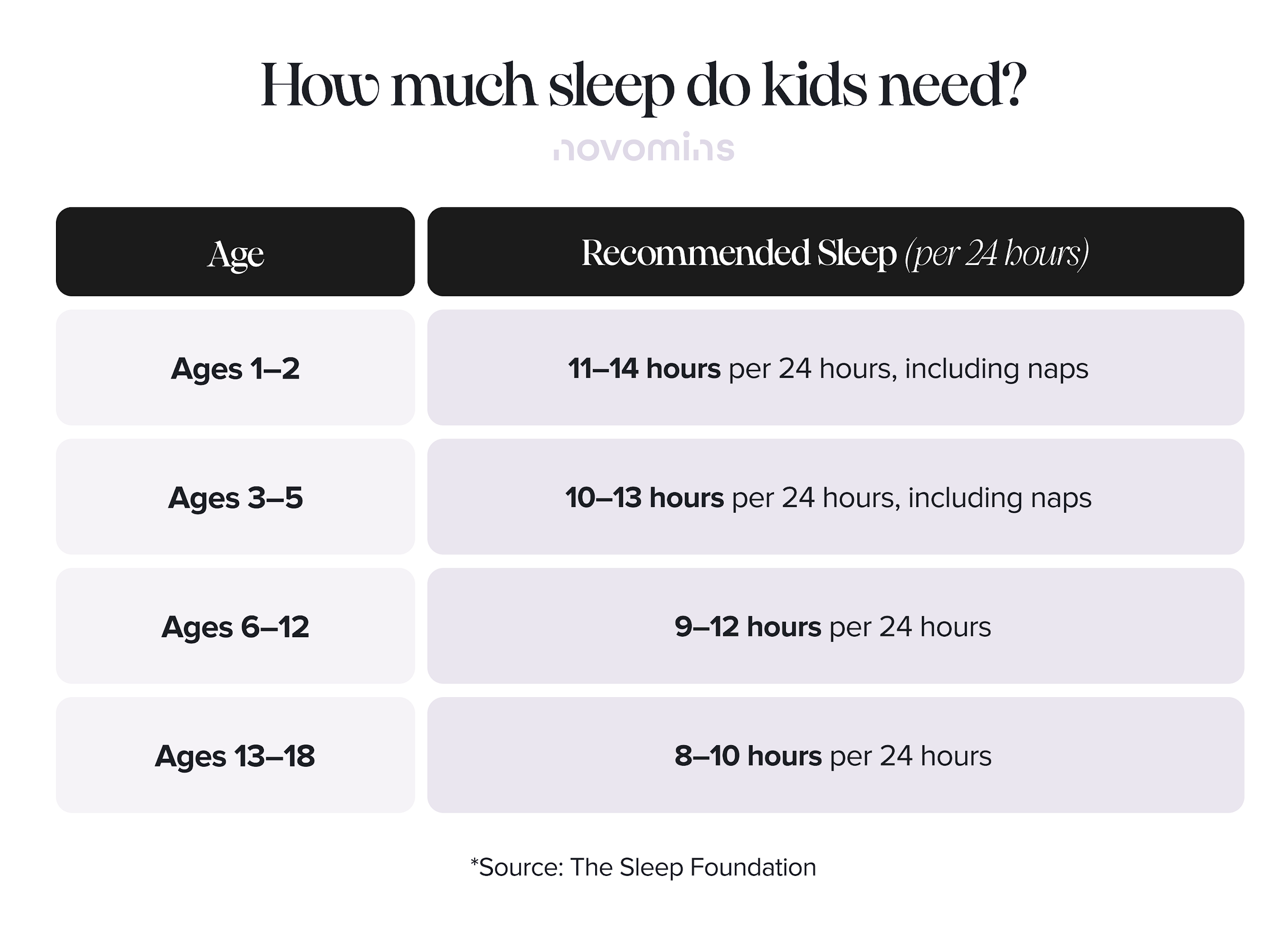
Children need considerably more sleep than adults, and those requirements change as they grow.
View as text
How much sleep do kids need?
| Age | Recommended Sleep (per 24 hours) |
|---|---|
| Ages 1–2 | 11–14 hours per 24 hours, including naps |
| Ages 3–5 | 10–13 hours per 24 hours, including naps |
| Ages 6–12 | 9–12 hours per 24 hours |
| Ages 13–18 | 8–10 hours per 24 hours |
*Source: The Sleep Foundation
Regularly getting the recommended amount of sleep is associated with better attention, behaviour, learning, memory, emotional regulation and physical and mental health.
That makes protecting children’s sleep less about achieving a picture-perfect bedtime and more about giving growing brains and bodies enough opportunity to properly recharge.
Magnesium for Kids: Meet the Mineral Having a Bedtime Moment
If you’ve searched for ways to support your child’s night-time routine recently, you’ve probably come across magnesium.
But this isn’t just another wellness trend.
Magnesium is an essential mineral involved in hundreds of processes throughout the body, with recognised roles spanning the nervous system, psychological function, energy metabolism, muscles, bones and teeth.
View as text
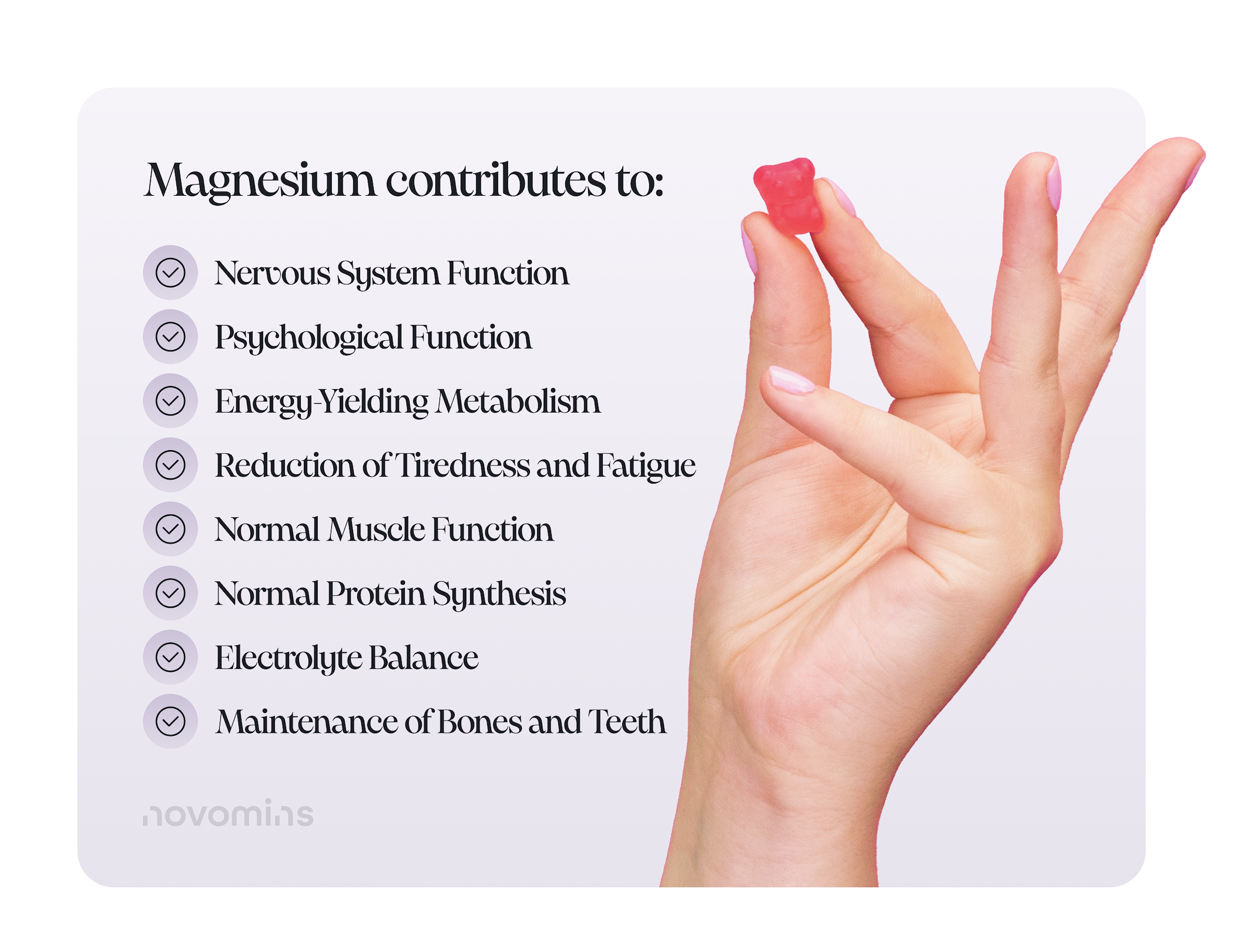
Magnesium contributes to:
- Nervous System Function
- Psychological Function
- Energy-Yielding Metabolism
- Reduction of Tiredness and Fatigue
- Normal Muscle Function
- Normal Protein Synthesis
- Electrolyte Balance
- Maintenance of Bones and Teeth
So while magnesium has earned itself a reputation as a night-time nutrient, its role begins long before bedtime.
Magnesium, the Nervous System, and Kids’ Sleep
One reason magnesium is particularly interesting in the conversation around kids’ sleep is its relationship with the nervous system.
The nervous system is essentially the body’s communication network, carrying signals between the brain, spinal cord and the rest of the body. Magnesium contributes to its normal functioning, while also contributing to normal psychological function.
Rather than thinking of magnesium as something that belongs exclusively beside the bed, it makes more sense to see it as part of the whole-day nutritional picture, alongside the foundations that matter for healthy sleep: adequate sleep opportunity, regular bedtimes, a calm environment and consistent night-time routines.
Magnesium and ADHD: What Does the Research Show?
There’s another interesting area of research involving magnesium and children’s nervous system health.
Scientists have investigated magnesium status in children with attention-deficit/hyperactivity disorder (ADHD).

View as text
A systematic review and meta-analysis reported lower serum and hair magnesium concentrations in children with ADHD compared to healthy controls.
That’s an interesting nutritional association, particularly considering magnesium’s established contribution to normal psychological function and normal functioning of the nervous system.
Magnesium Isn’t Just for Night-Time
Magnesium’s reputation as the bedtime mineral can actually sell it a little short.
Magnesium contributes to normal energy-yielding metabolism and the reduction of tiredness and fatigue, while also contributing to normal muscle function, normal protein synthesis and electrolyte balance.
Then there are growing bones and teeth.
Magnesium contributes to the maintenance of normal bones and normal teeth, making it one of several essential nutrients that matter throughout childhood and adolescence.
Which Foods Are High in Magnesium?

View as text
Magnesium occurs naturally in a surprisingly wide range of everyday foods, including:
- Nuts and Seeds
- Beans and Pulses
- Wholegrains
- Leafy Green Vegetables
- Avocado
- Some Fortified Cereals
- Certain Dairy and Plant-Based Foods
Of course, knowing spinach contains magnesium and convincing a six-year-old that spinach deserves a starring role at dinner are two very different things.
The goal isn’t perfection. A varied and balanced diet remains the foundation, with age-appropriate supplementation available where appropriate.
Why Is a Bedtime Routine Important for Kids’ Sleep?
Nutrition is one piece of the puzzle. Routine is another.
View as text
In a study involving more than 10,000 children aged 0–5, having a consistent bedtime routine was associated with earlier bedtimes, falling asleep more quickly, fewer night wakings and longer sleep duration.
Researchers also found a dose-dependent relationship, meaning that the more consistently families followed their bedtime routines, the better the sleep outcomes tended to be.
So rather than reinventing bedtime every evening, make it familiar.
View as text
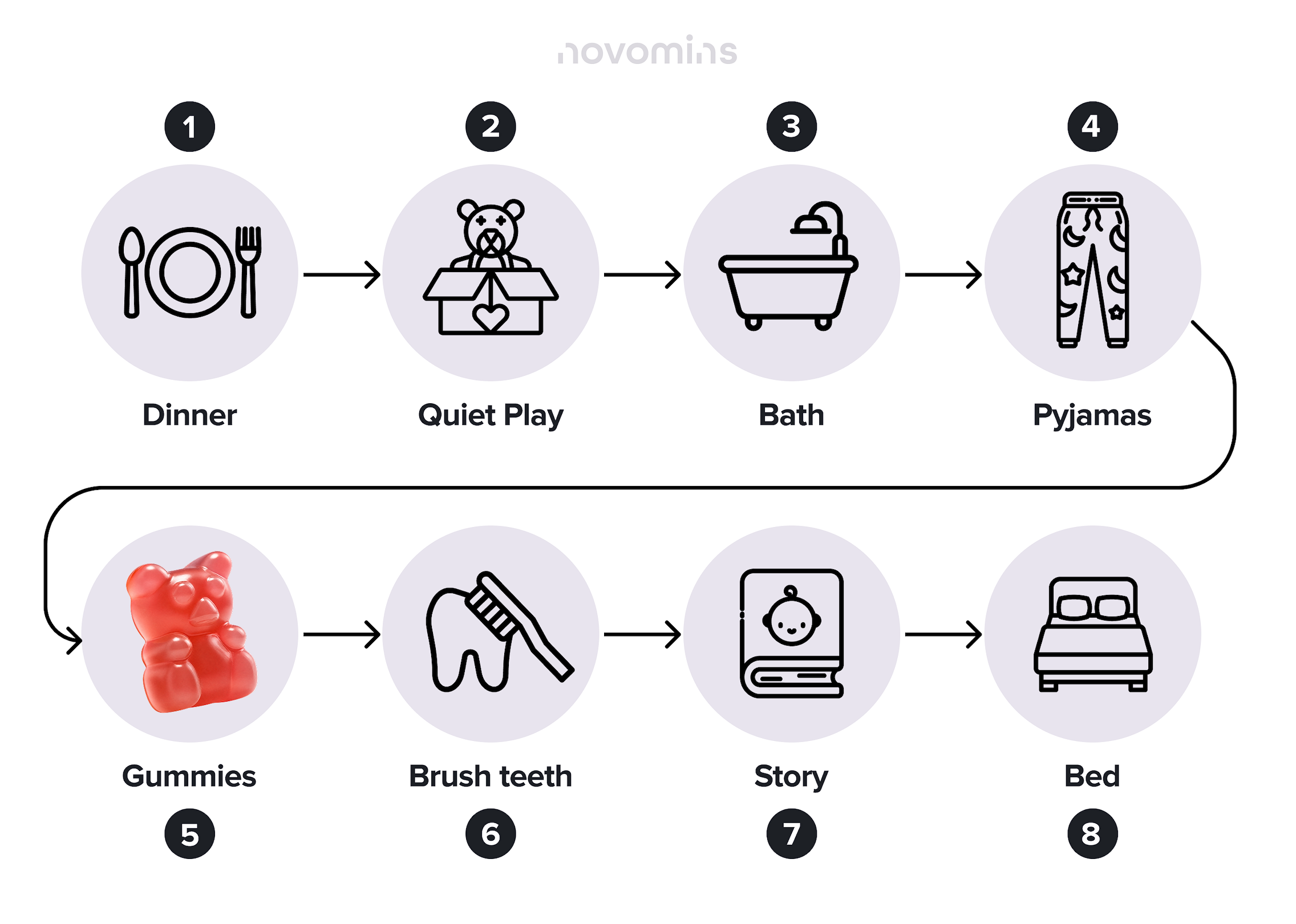
Easy Bedtime Routine for Kids
- Dinner
- Quiet Play
- Bath
- Pyjamas
- Gummies
- Brush teeth
- Story
- Bed
It doesn’t need to be elaborate. The repetition itself creates familiar cues that the busy part of the day is coming to an end.
What About Screen Time and Kids’ Sleep?
Then there’s the glowing elephant in the bedroom. Screens.
A systematic review examining electronic media use and sleep found that screen use was generally associated with shorter sleep duration in children and adolescents, with evidence in school-aged children also linking media use with later bedtimes and poorer sleep quality.
View as text
Another meta-analysis involving more than 125,000 children and adolescents found that portable screen-based media use around bedtime was associated with inadequate sleep quantity, poorer sleep quality and excessive daytime sleepiness.
That doesn’t mean technology needs to become the enemy.
Instead, creating a predictable period with less stimulating screen use before bed can make it easier to transition from one more episode mode to night-time mode.
How to Build a Better Kids’ Sleep Routine
A healthy bedtime routine doesn’t need twelve steps, a spreadsheet and military precision.
View as text
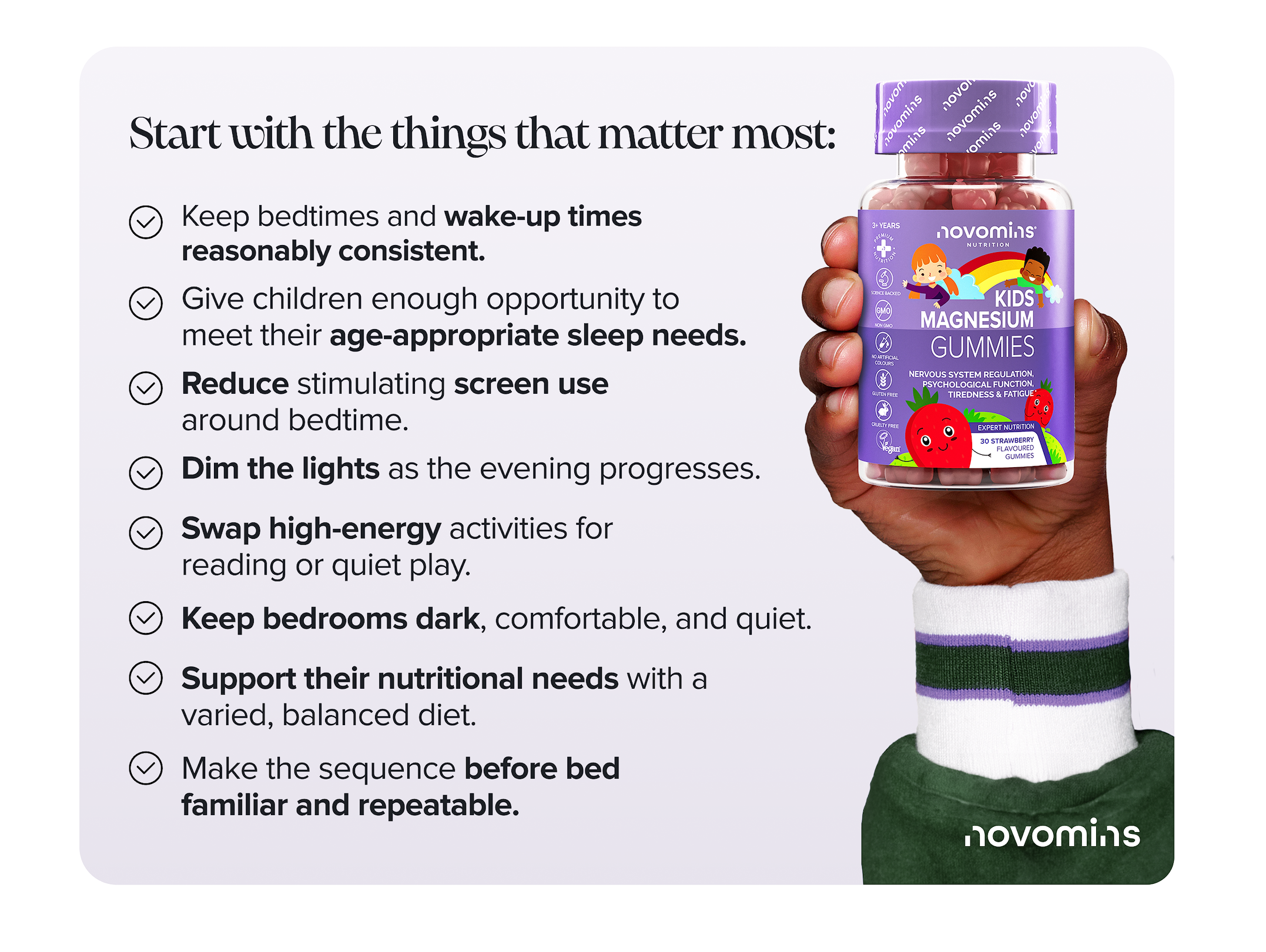
Start with the things that matter most:
- Keep bedtimes and wake-up times reasonably consistent.
- Give children enough opportunity to meet their age-appropriate sleep needs.
- Reduce stimulating screen use around bedtime.
- Dim the lights as the evening progresses.
- Swap high-energy activities for reading or quiet play.
- Keep bedrooms dark, comfortable, and quiet.
- Support their nutritional needs with a varied, balanced diet.
- Make the sequence before bed familiar and repeatable.
Think, less perfect bedtime routine and more consistent cues that tell their body the day is winding down.
Meet Novomins Kids Magnesium Gummies
When the day starts winding down, make magnesium part of the routine.
Novomins Kids Magnesium Gummies put one of the most important minerals for growing bodies into an easy evening ritual.

Loved by over 1 million parents, their natural strawberry-flavour lights up little smiles all across the globe, daily.

From the nervous system and psychological function to energy, muscles, bones and teeth, magnesium's role stretches across the whole day.

Because better kids’ sleep is about the bigger picture: quality sleep, less screens before bed, good nutrition, and a consistent routine their body recognises night after night.
TL;DR: Kids’ Sleep & Magnesium
Short on time? Here’s what parents need to know:
- Kids need plenty of sleep. Children aged 3-5 generally need 10-13 hours per day, while children aged 6-12 need around 9-12 hours.
- Consistency matters. Research links regular bedtime routines with earlier bedtimes, faster sleep onset, fewer night wakings and longer sleep duration.
- Magnesium is one of the hero nutrients worth knowing about. It contributes to normal nervous system function, normal psychological function, normal muscle function and the reduction of tiredness and fatigue.
- Magnesium and kids’ sleep are an interesting area of research, particularly because of magnesium’s involvement in nervous system function and neurotransmission.
- Magnesium status has also been studied in children with ADHD, with research reporting lower serum and hair magnesium concentrations in children with ADHD compared with controls.
- Screens matter too. Research has associated bedtime screen use with shorter sleep duration and poorer sleep outcomes in children and adolescents.
- Think routine, not one magic fix. Good nutrition, enough sleep, fewer stimulating screens and a consistent wind-down routine all belong in the bedtime conversation.
SHOP NOVOMINS KIDS MAGNESIUM GUMMIES
Good days. Better bedtime habits. We have a gummy for it. 🌙
From Our Community