


Screen time and sleep are closely linked for many children. If you’ve ever wondered whether screen time before bed affects your child’s ability to fall asleep, keep reading!
Many parents wonder how much screen time is appropriate, whether blue light affects sleep, and how to build healthy bedtime routines that help children sleep better.
The good news is that creating balanced screen habits doesn’t mean banning technology. It simply means helping children get the quality sleep they need to learn, grow and thrive.
Is Screen Time Bad for Kids? Understanding the Balance
Screens are woven into everyday family life. They help children learn, stay connected with loved ones and enjoy their favourite shows and games. Technology is not the enemy, but like most things, balance matters.
When screens become part of the bedtime routine, however, they can make it more difficult for some children to switch off.

Why Quality Sleep Matters for Children’s Health and Development
Sleep is one of the most important foundations for a child’s development. While they sleep, their brains organise memories, process what they have learned during the day and support healthy growth.
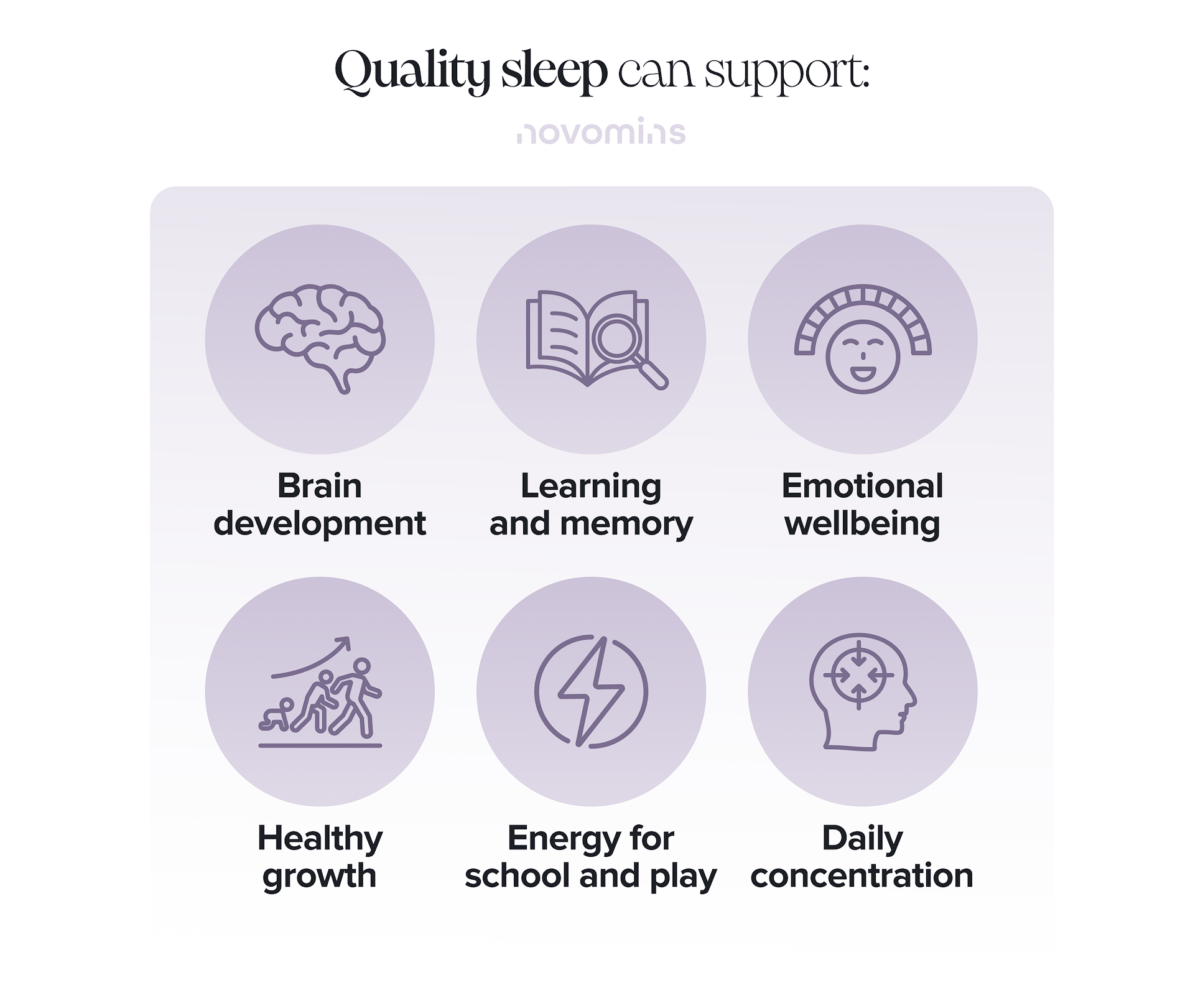
When children sleep well, they often wake feeling more refreshed, ready to learn, and better able to manage the day’s challenges.
How Much Sleep Does My Child Need?
Every child is different, but these recommendations from the Sleep Foundation provide a helpful guide for the amount of sleep children should aim for over a 24-hour period.
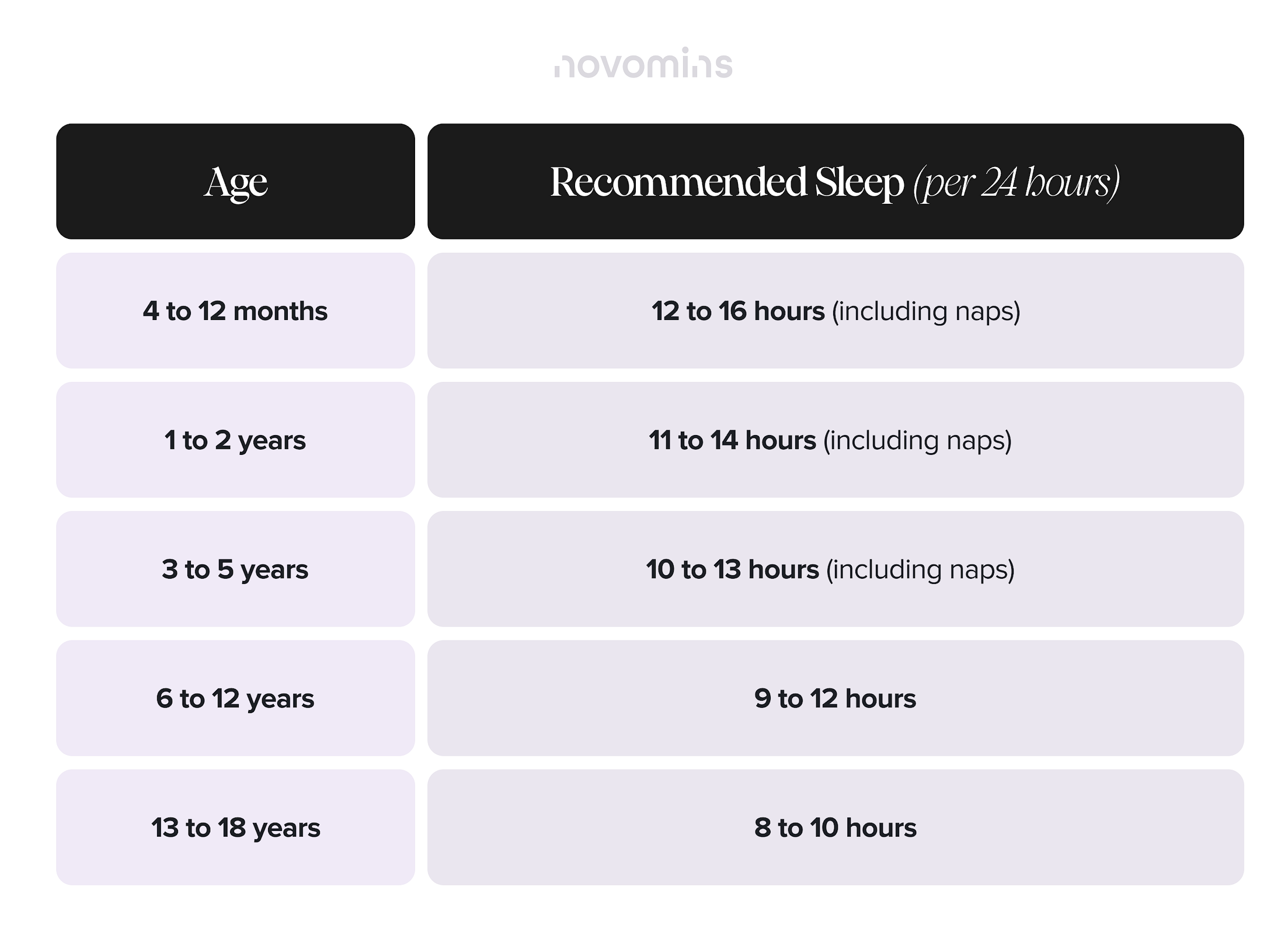
It’s important to remember that these are guidelines, not rules. Some children naturally need a little more or a little less sleep than others.
The best signs that your child is getting enough rest are that they wake feeling refreshed, have plenty of energy during the day, and can concentrate, learn and play without regularly becoming overtired.
How Screen Time Before Bed Can Affect Children’s Sleep
Not every child responds to screens in the same way, but evening screen use may affect sleep for several reasons.
Bright light from phones, tablets ,and televisions may make it harder for some children to feel sleepy, while exciting games, videos, or social media can keep the brain active long after the device is switched off.
If bedtime gradually becomes later because of screen use, children may simply end up getting less sleep overall.
Screen time before bed may also replace other healthy bedtime activities, such as reading together, talking about the day, or enjoying a calming routine. These quiet moments help children transition from an active day to sleep and are an important part of healthy sleep hygiene.

How Much Screen Time Should Children Have Each Day?
According to guidance from the UK Government’s Early Years Screen Time Advisory Group, healthy screen habits are more important than simply counting hours.
The goal is to ensure that screen use supports, rather than replaces, healthy sleep, physical activity, learning, and family time.
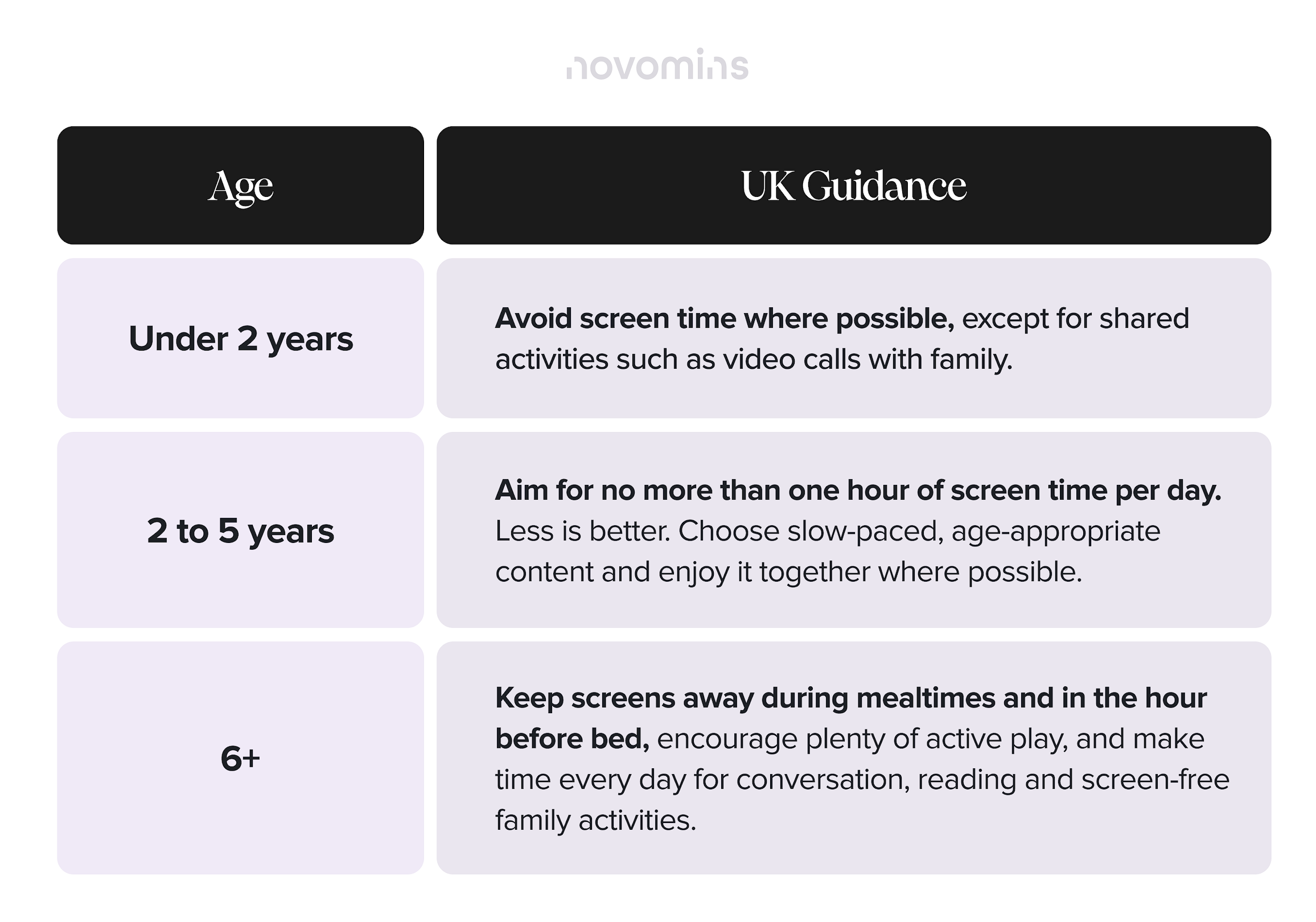
Expert Screen Time Recommendations for Children
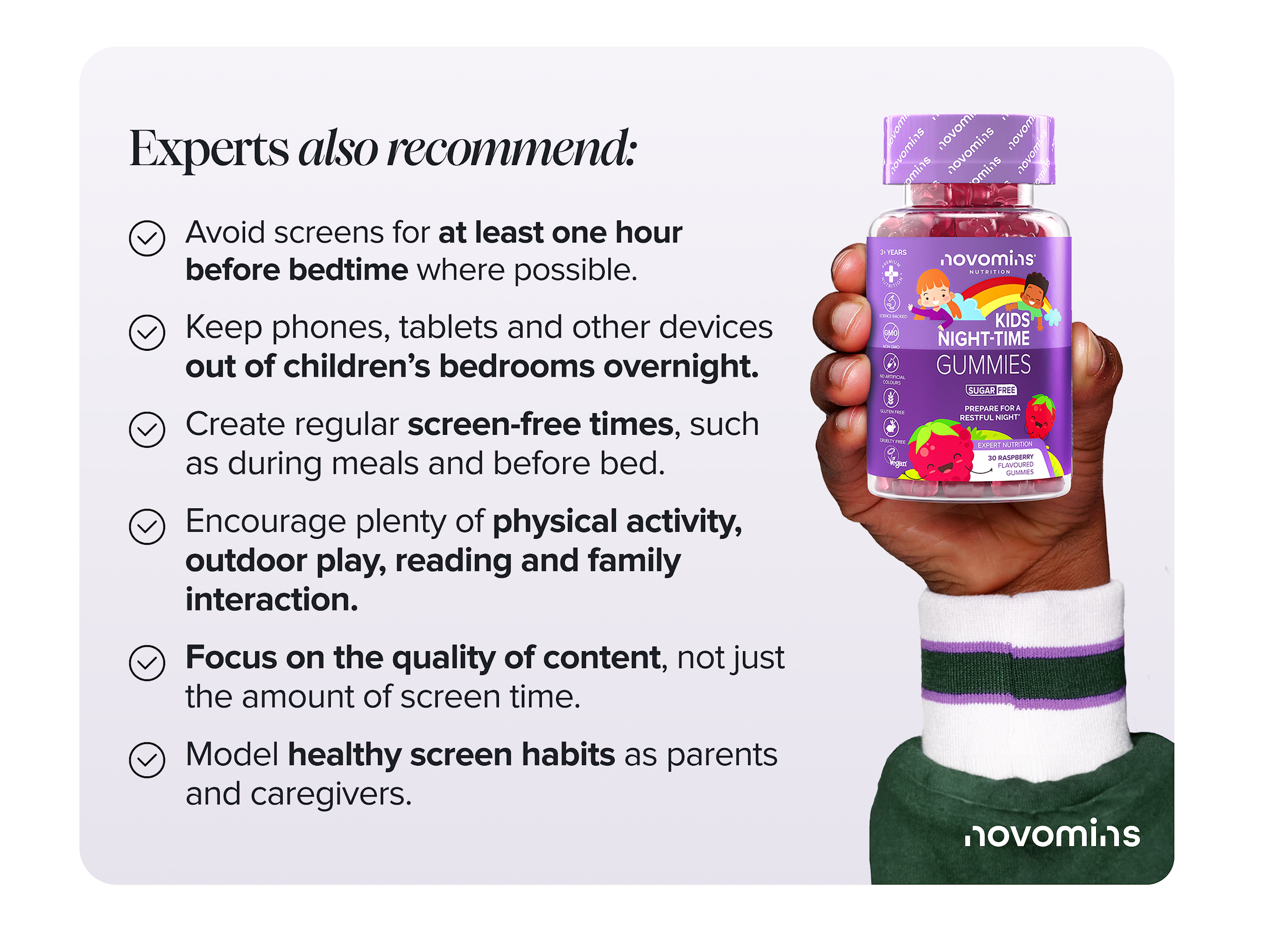
It’s Not About Removing Screens
Technology is part of modern childhood, and it offers many educational and social benefits.
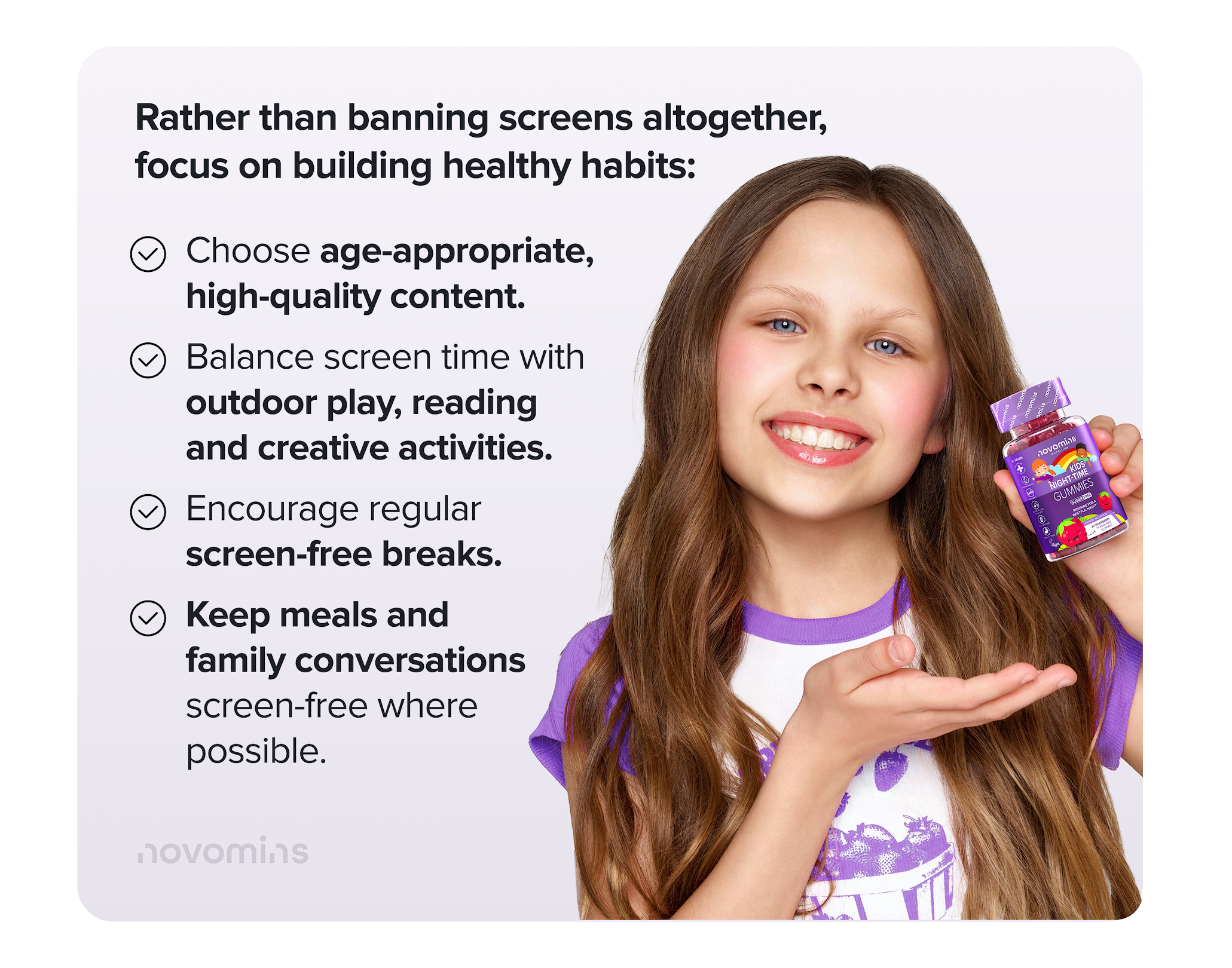
Healthy habits are far more sustainable than strict rules.
6 Simple Tips for Better Screen Habits
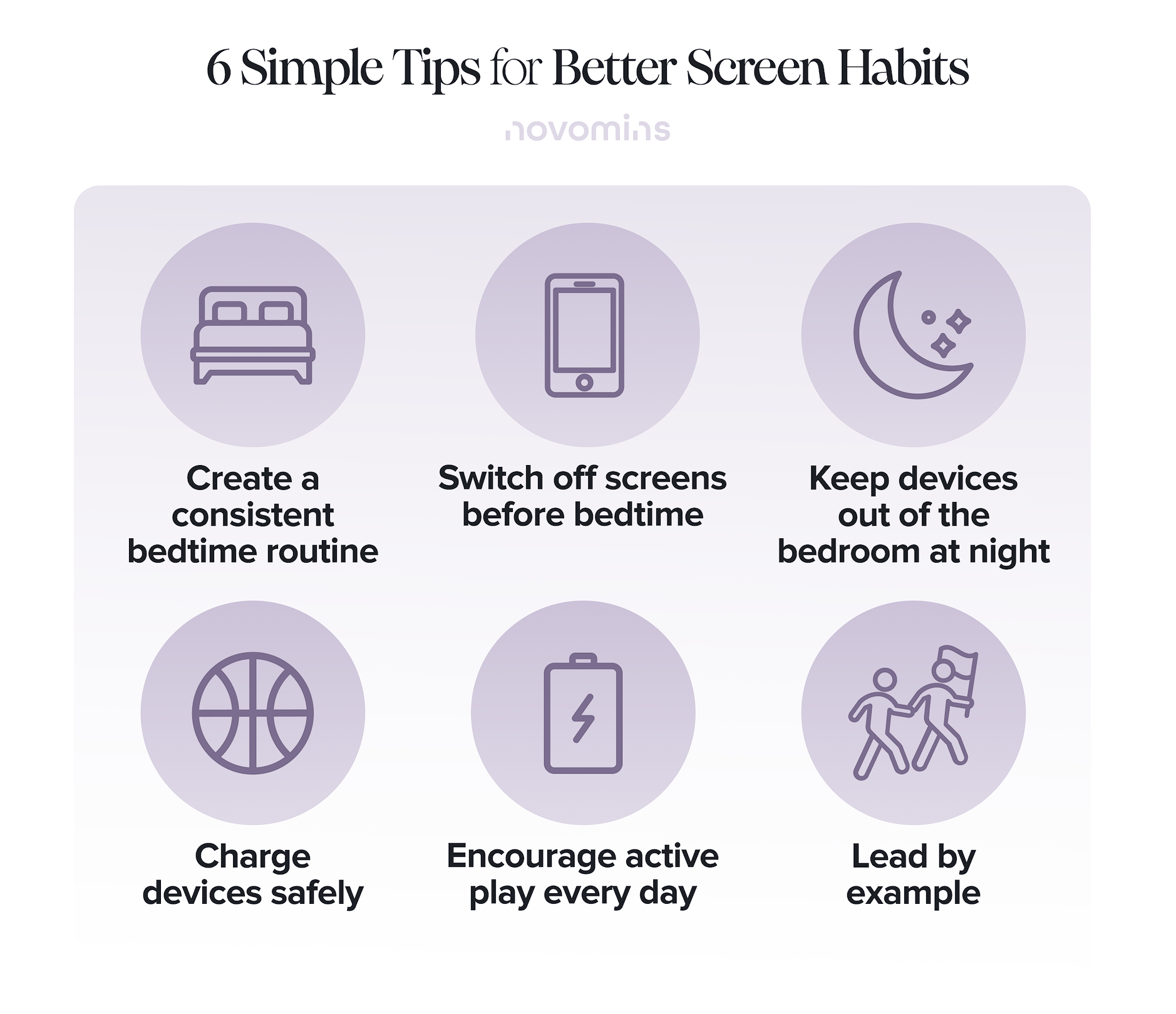
- Create a consistent bedtime routine. Children thrive on predictable routines.
- Switch off screens before bedtime. Giving the brain time to unwind before sleep may help children settle more easily.
- Keep devices out of the bedroom overnight. This reduces both bedtime distractions and late-night notifications.
- Charge devices safely. Avoid charging phones or tablets in beds, under pillows or beneath blankets. Lithium-ion batteries can overheat if heat becomes trapped, so devices should always be charged on a hard, well-ventilated surface using an appropriate charger.
- Encourage active play every day. Running, climbing, cycling, and outdoor play all contribute to healthy development and help children naturally feel ready for sleep.
- Lead by example. Children often copy adult habits. Putting your own phone away during family time sends a powerful message.
Signs Your Child May Need a Better Screen-Life Balance
If your child regularly experiences any of the following, it may be worth reviewing their daily screen habits:
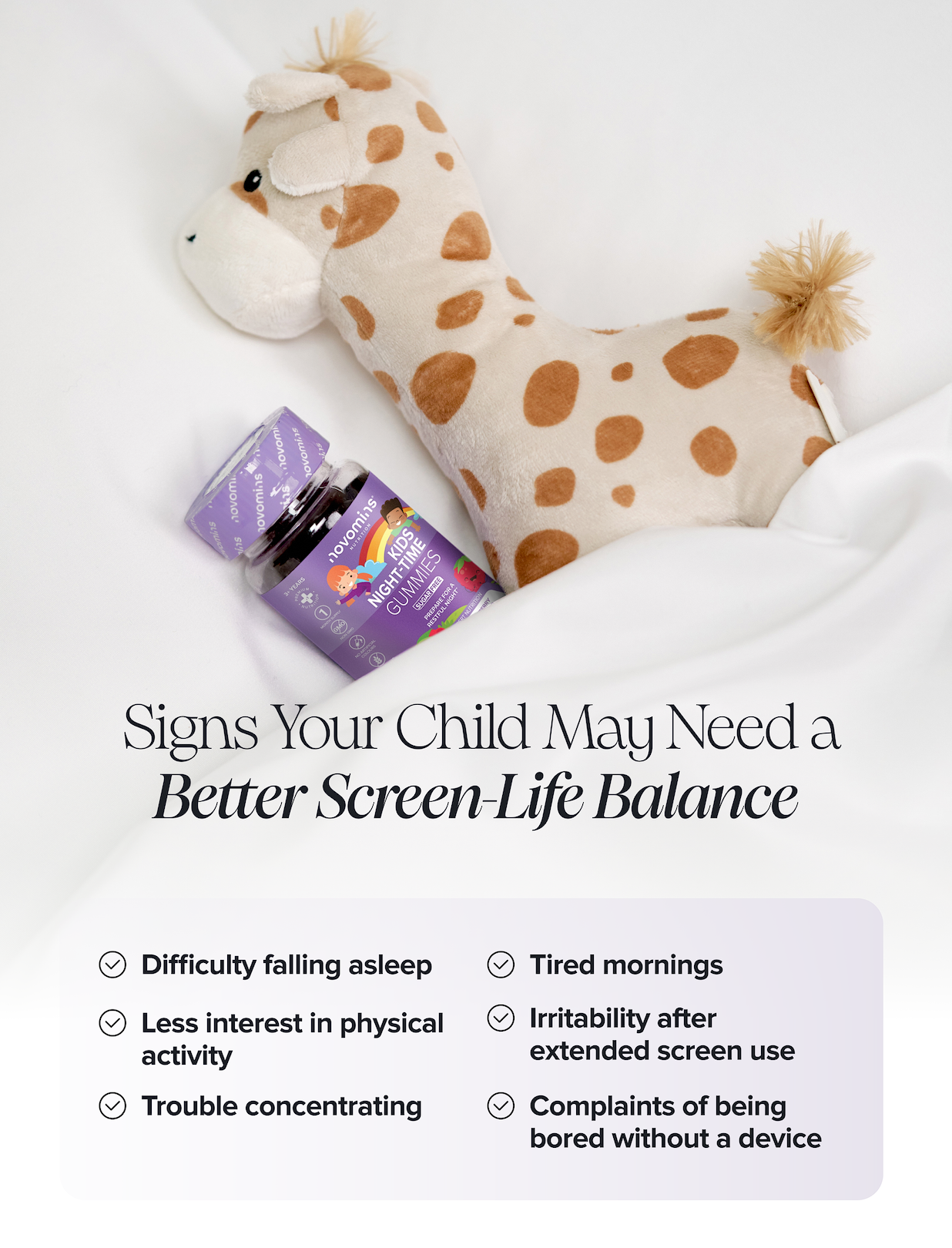
These signs can have many different causes, so they should not automatically be blamed on screens. However, reviewing daily routines is often a good place to start.
How to Create a Better Bedtime Routine for Children
Bedtime routines do not need to be complicated.
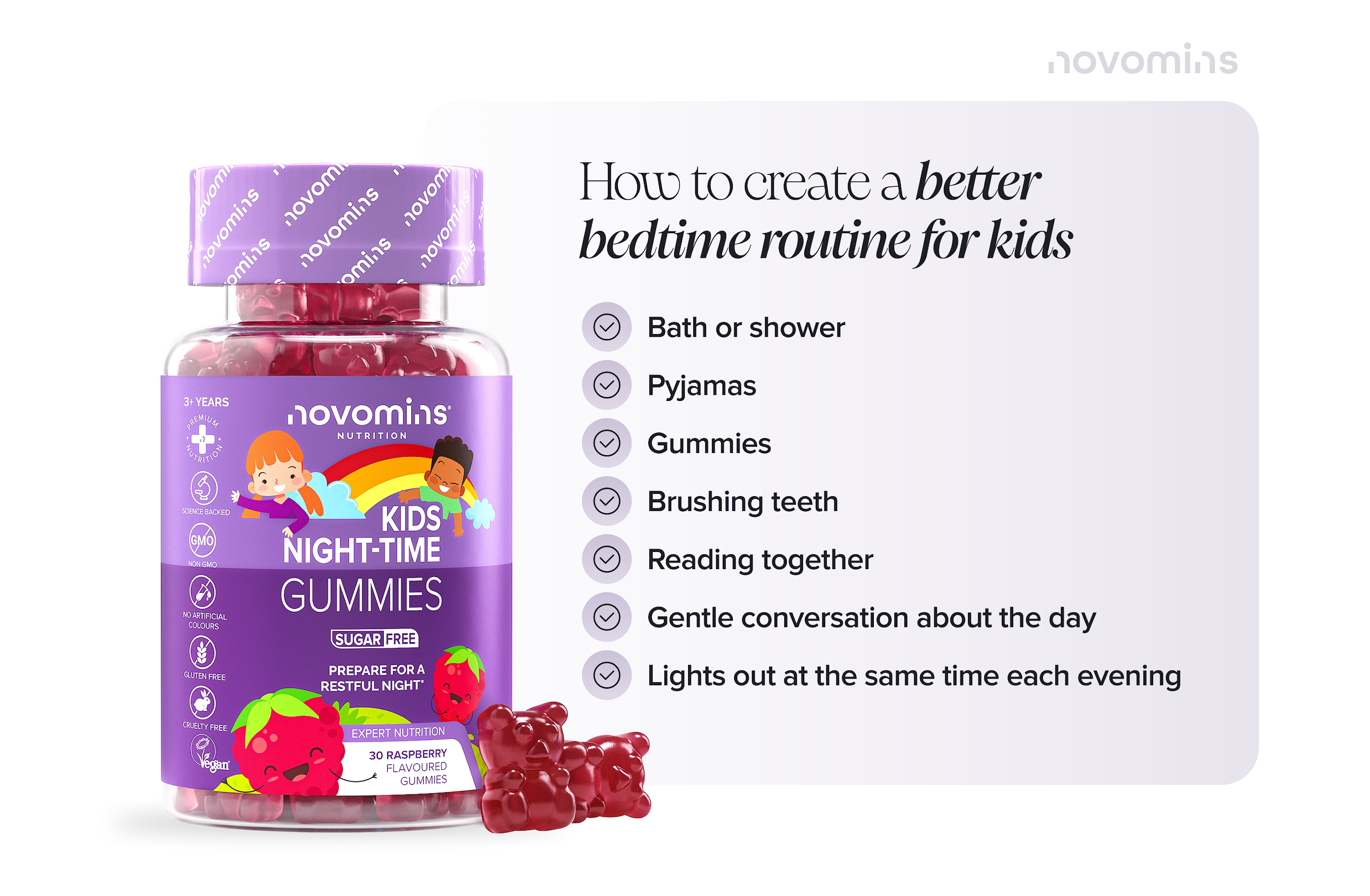
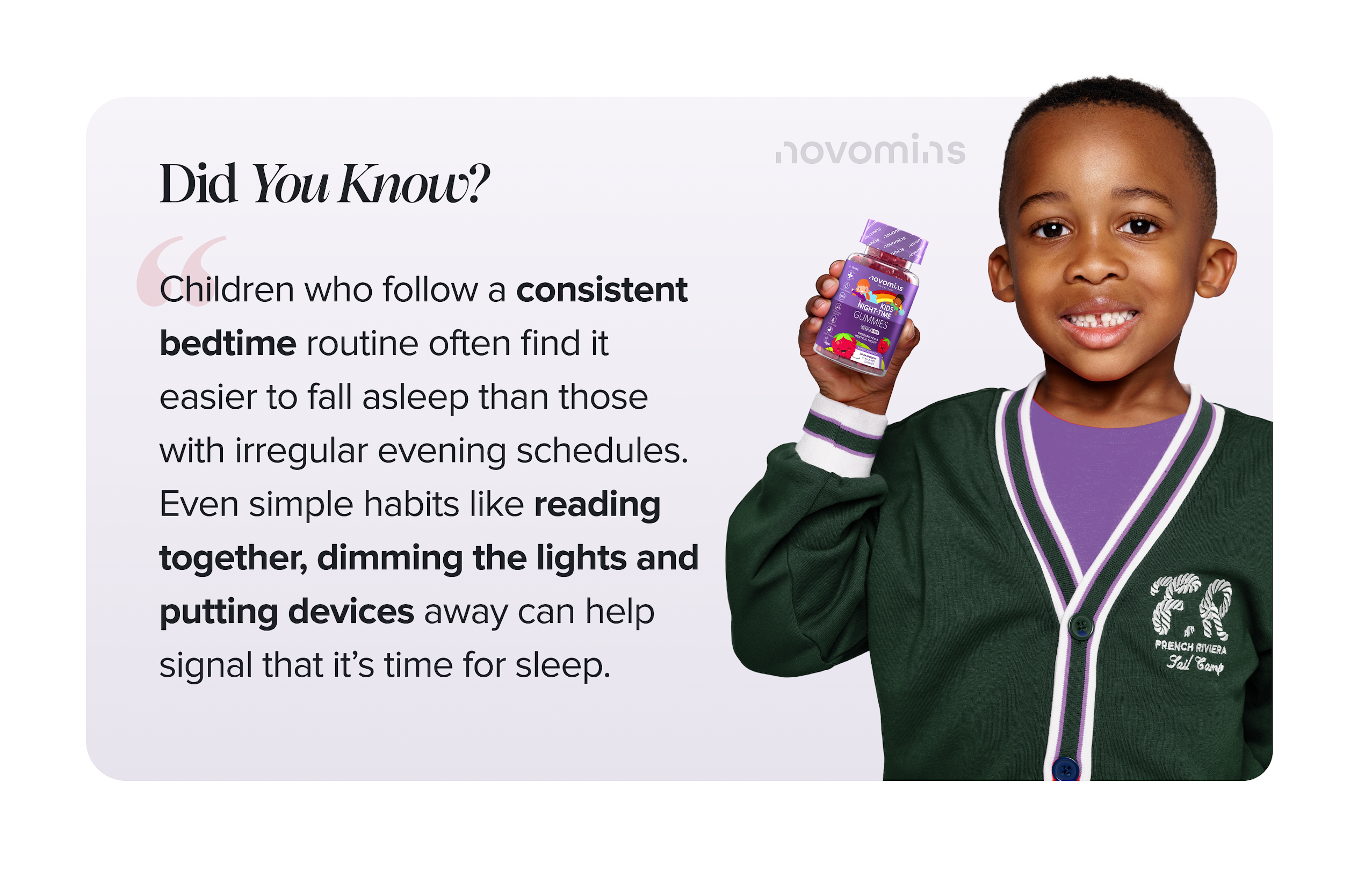
Consistency matters far more than perfection. Even small routines repeated every night help signal that it is time to wind down.
Supporting Healthy Sleep Habits Every Night
A peaceful bedtime is built through small, consistent habits.
Dimming the lights, putting devices away, reading together, and keeping bedtime predictable all help create a calm transition from a busy day to a restful night.
For families looking to support these healthy routines, Novomins Kids Night-Time Gummies can become part of the evening ritual.

Our thoughtfully formulated Kids Night Time Gummies combine carefully selected vitamins, minerals, amino acids, and botanicals to complement a calm and consistent evening routine.

The formula includes vitamins B3, B6 and B12, magnesium, and zinc, with key nutrients contributing to normal psychological function and normal functioning of the nervous system.
Alongside them is a botanical blend of chamomile, lavender, and lemon balm, herbs traditionally associated with calming evening rituals, plus the amino acids L-theanine and glycine, which are commonly included in relaxation-focused formulations.
Together, they create an easy addition to those familiar wind-down cues: screens away, pyjamas on, bedtime routine underway.

Taken as part of a balanced diet and healthy lifestyle, they fit naturally into a calming bedtime routine alongside stories, cuddles, and screen-free family time.
We have a gummy for it.
🧸 SHOP KIDS NIGHT-TIME GUMMIESKey Takeaways
- Quality sleep supports children’s learning, growth, and emotional wellbeing.
- Screen time before bed may make it harder for some children to fall asleep.
- Healthy screen habits are more important than strict time limits.
- Consistent bedtime routines help children wind down more easily.
- Keeping devices out of bedrooms supports better sleep and safer charging practices.
- Novomins Kids Night-Time Gummies combine key vitamins, minerals, and botanicals known for their role in relaxation and wind-down routines.
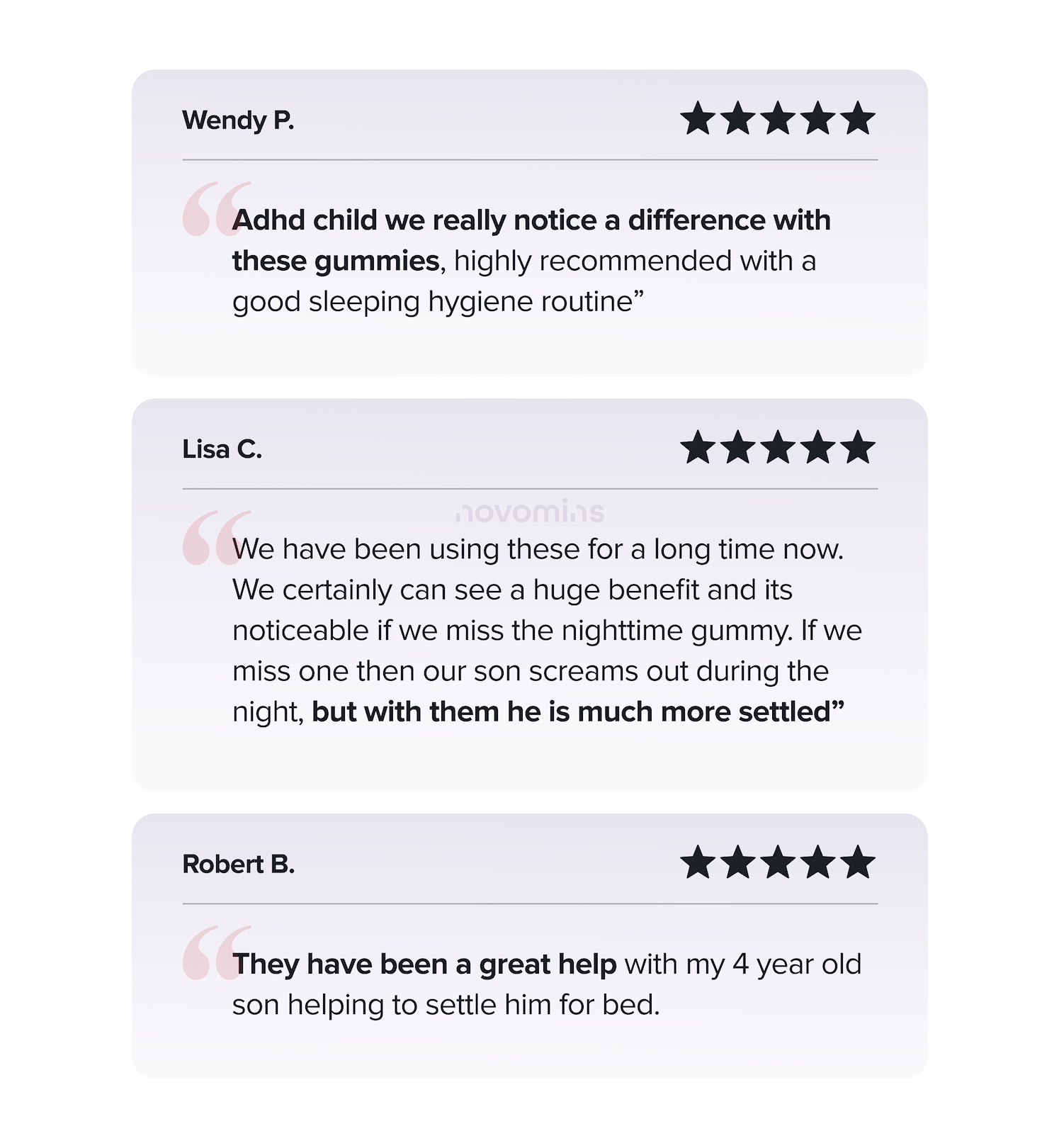
From Our Community
🧸 SHOP KIDS NIGHT-TIME GUMMIES
Frequently Asked Questions
Is screen time bad for children?
Not necessarily. Technology can support learning, creativity, and staying connected with family. The key is balance. Healthy screen habits help ensure that screen use does not replace sleep, physical activity, learning, or family time.
How much screen time should children have each day?
There is no single daily limit that suits every child. UK guidance recommends avoiding screen time where possible for children under 2 years (except for video calls), limiting children aged 2 to 5 years to around one hour of high-quality screen time each day, and focusing on healthy media habits for older children rather than strict time limits.
Does blue light from screens affect children’s sleep?
Research suggests that bright light from screens may influence the body’s natural sleep-wake cycle by making some children feel less sleepy in the evening. Not every child is affected in the same way, but reducing screen use before bed may help children who struggle to settle at night.
Can watching TV before bed make it harder to fall asleep?
It can. Exciting programmes, fast-paced content, or extended screen time in the evening may keep the brain active when it should be winding down. Choosing quiet, screen-free activities before bed may help children relax.
Can too much screen time affect behaviour?
For some children, excessive screen time, particularly if it replaces sleep, physical activity or social interaction, may be associated with tiredness, irritability or difficulty concentrating. Looking at the balance of a child’s daily routine is often more helpful than focusing on screen time alone.
Is educational screen time different?
Educational content can provide valuable learning opportunities. However, it is still worth considering when it is used. Even educational activities can be stimulating if they take place immediately before bedtime.
At what age should children have their own device?
There is no universal age. This decision depends on your child’s maturity, your family’s needs, and whether they are ready to use technology responsibly with appropriate guidance and boundaries.
Can nutrition support a healthy bedtime routine?
Healthy sleep begins with consistent routines, regular physical activity, and a balanced diet. For families looking to support their evening routine, Novomins Kids Night-Time Gummies can be included as part of a healthy lifestyle.
They contain magnesium, which contributes to normal psychological function and the normal functioning of the nervous system, alongside vitamin B6, which contributes to normal psychological function and the reduction of daytime tiredness and fatigue. They are designed to complement, not replace, healthy bedtime habits.


